

World Sleep Day and Your Tech
[UPDATED May 16, 2025: I’ve added melatonin to the Non-Tech Solutions at the end of the post.]
Friday, March 14, 2025, is World Sleep Day. Most Americans are still adjusting to Daylight Savings Time. We’d love more sleep.
I had some struggles with insomnia a few years ago. I sleep well now and thought I’d pass along some tips I’ve discovered.
Using Electronic Devices
You’ve read, I’m sure, that using devices with screens can interfere with your sleep.
Read How Electronics Affect Sleep from the Sleep Foundation to learn what happens with your hormones when using electronics before bed. They recommend you avoid blue light devices for a few hours at the end of the day.
If you can’t do that, they suggest these options:
- Decrease your overall electronics use.
- Remove all electronics from your bedroom.
- Lower the brightness of your screen. Use nighttime mode, which washes your screen with an amber color.
- Buy blue light-blocker glasses. (I have a pair of inexpensive glasses with amber lenses.)
This year, I’m off the computer by nine. If I watch TV with my husband, I make sure the show is not too stimulating. I haven’t put my amber glasses on to watch TV or use my phone.
Apps
You know about sleep and meditation apps, but I have no experience with them. The reviewers said some apps were awkward, annoying, or pricey. If you can recommend one, please do so in the comments.
I have used built-in audio in two apps.
My Fitbit and Fitbit app track the quality of my sleep each night. The app has a few mindfulness audios to help with sleep. If I’m awake in the middle of the night, I usually listen to a 30-minute reading of The Velveteen Rabbit on my phone. I’m usually asleep by the time we meet the Skin Horse. Listening to the same story helps. If I’m still awake when the toy rabbit meets the real bunnies, I know it’s been about 15 minutes and I’m having trouble falling asleep.
The second app, Soundcore, came with my new noise-cancelling headphones. Anyone could use the app if you don’t have one of their devices. I’m not interested in their nickel-sized sleep earbuds. (Here’s a ZDNet review for you to check them out.)
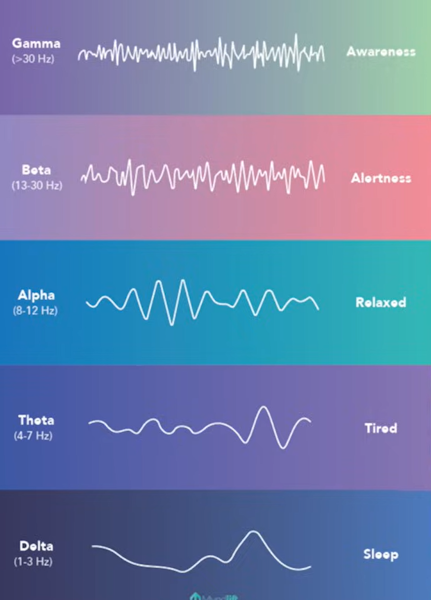
The Soundcore app has AI Brainwave Audio. I tried to research this, but couldn’t find anything definitive. If you listened to the audio using a headset with EEG sensors (electroencephalography), the AI would detect your brain waves. I’m listening to an audio recording on my phone, I assume the audio matches Delta waves for sleep.
I choose from three audios: Starry Sky, Ocean, and Forest. I also have five elements I can add to the audio. I chose:
- Singing Bowl to promote deep sleep.
- Wooden Fish to quiet my thoughts.
These elements remind me of the chiming and ticking of a grandfather clock.
I’ve been using this audio in the early morning if I’m awake too soon. The sound keeps going so I don’t want it to play all night.
So far, I’ve fallen back asleep for nine of the ten days I’ve used it.
It’s available in Google Play and the Apple Store.
Non-Tech Solutions
The standard sleep advice is to have a bedtime routine and a set sleep schedule (mine is 10:30 PM to 6:30 AM.). Your bedroom should be cool, dark, and quiet.
If that is not enough, do some detective work to discover your sleep issues and what works to get a good night’s sleep.
If you have a heart condition, ate something that upset your stomach, or exercised too late in the day, you may have insomnia. Pay attention until you figure this out.
I can also recommend:
- Environmental / Lifestyle
- A sound masking machine.
- An eye mask or blackout curtains.
- Keeping pen and paper by the bed to write down your thoughts.
- Getting regular exercise.
- A warm bath or shower (and other help with circadian rhythms).
- After 20 minutes of trying, get up and do simple stuff (maybe the bath). Then go back to bed.
- Your Body
- Taking sleepy dust under your tongue. I make this with just the sugar and the salt. Try it tonight!
- Drinking chamomile tea in the evening.
- Eating cherries or elderberries in the evening. (I have dried cherries or juice and an elderberry supplement.)
- Inhaling, and then exhaling for a longer count. I usually fall asleep quickly. See the notes for more breathing exercises.
- I cannot take melatonin because I’m on blood thinner medication. Start with the smallest dose (1 mg) and work up, if needed.
I even checked my supplements to see if they affected my sleep. Here’s mine:
-
- Linked to insomnia. Take in the morning: Vitamin B12.
- Promotes sleep. Take before bed: Bergamot, Cinnamon, Elderberry, Iodine, Magnesium with Zinc.
Read my post, Your Eyes, Your Health, and Electronics, for important information. If you are over 45, you will want to learn about melatonin and your health.
Let me know if you improve your sleep!
NOTES:
For further understanding:
- Breathing Techniques for Sleep (WebMD).
- AI Brainwave Decoding: A Revolution in Neuroscience. This doctor examines many issues, such as privacy. The chart of brain waves is from his video.
- Learn about your circadian rhythms.
- Research your supplements.
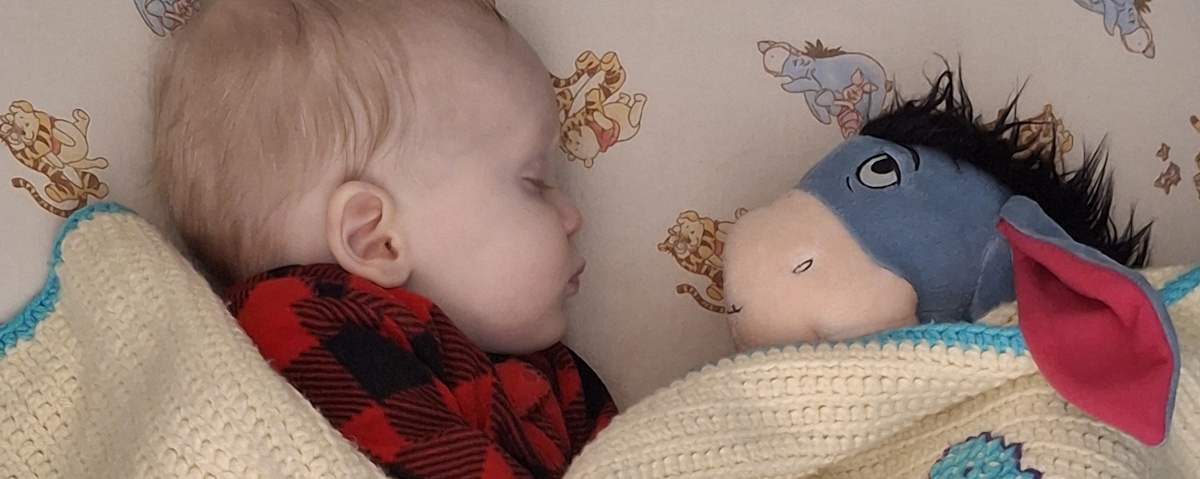
The photo is of our youngest grandchild (we have eight!) I made the afghan and bought the plushie. “Gloomy old Eeyore” is my favorite A. A. Milne character. Here’s a quote from Eeyore: “If the person you are talking to doesn’t appear to be listening, be patient.”
 eQuipping for eMinistry